
Official inauguration of the NanoIC pilot line
February 9, 2026 | imec Leuven, Belgium
This event will bring together key stakeholders to celebrate this major milestone for Europe’s semiconductor ecosystem.
On February 9, 2026, imec will officially inaugurate the NanoIC pilot line at its headquarters in Leuven. This initiative represents a landmark achievement for Europe’s semiconductor industry, turning the ambitions of the EU Chips Act into reality.
Backed by a €2.5 billion investment from the European Union, the Flemish government, and industry partners including ASML, the NanoIC pilot line will enable the development of beyond-2nm systems-on-chip, driving breakthroughs in AI, autonomous vehicles, personalized medicine, 6G networks, and quantum computing. It serves as a world-class platform for advanced R&D, an accelerator for innovation, and a training hub for the next generation of semiconductor talent.
As precursors of the NanoIC pilot line, the RRF projects granted to imec on the high-NA lab and the testing and experimentation facility for edge AI, have set the scene. As host of the NanoIC pilot line, imec brings over 40 years of semiconductor leadership and the world’s most advanced 300mm research cleanroom to this initiative. Together with partners CEA-Leti (France), Fraunhofer (Germany), VTT (Finland), Tyndall National Institute (Ireland), and CSSNT-UPB (Romania), we are building the infrastructure that will keep Europe at the forefront of technological progress.
Program
09:30 - 10:00
Welcome and registration
10:00 - 10:05
Welcome
Katrien Marent, EVP & Chief Marketing and Communications Officer, imec
10:05 - 10:20
NanoIC pilot line: Beyond-2nm system-on-chip to empower solutions that drive economic growth in Europe
Luc Van den hove, President & CEO, imec
10:20 - 10:30
Accelerating innovation in the age of AI
Christophe Fouquet, President & CEO, ASML
10:30 - 10:40
Building a stronger European semiconductor ecosystem through a network of Competence Centres
Régis Hamelin, CTO, BLUMORPHO & Coordinator, aCCCess
10:40 - 10:45
Intervention by Henna Virkkunen, Executive Vice-President for Tech Sovereignty, Security and Democracy, European Commission
10:45 - 10:50
Intervention by Bart De Wever, Prime Minister of Belgium
10:50 - 11:00
Intervention by Matthias Diependaele, Minister-President of Flanders
11:00 - 11:15
Access to imec's advanced technologies driving Europe's innovation - from NanoIC to EuroCDP
Romano Hoofman, imec
11:15 - 11:45
Official opening of the NanoIC pilot line
12:00 - 13:00
Networking lunch
Speakers
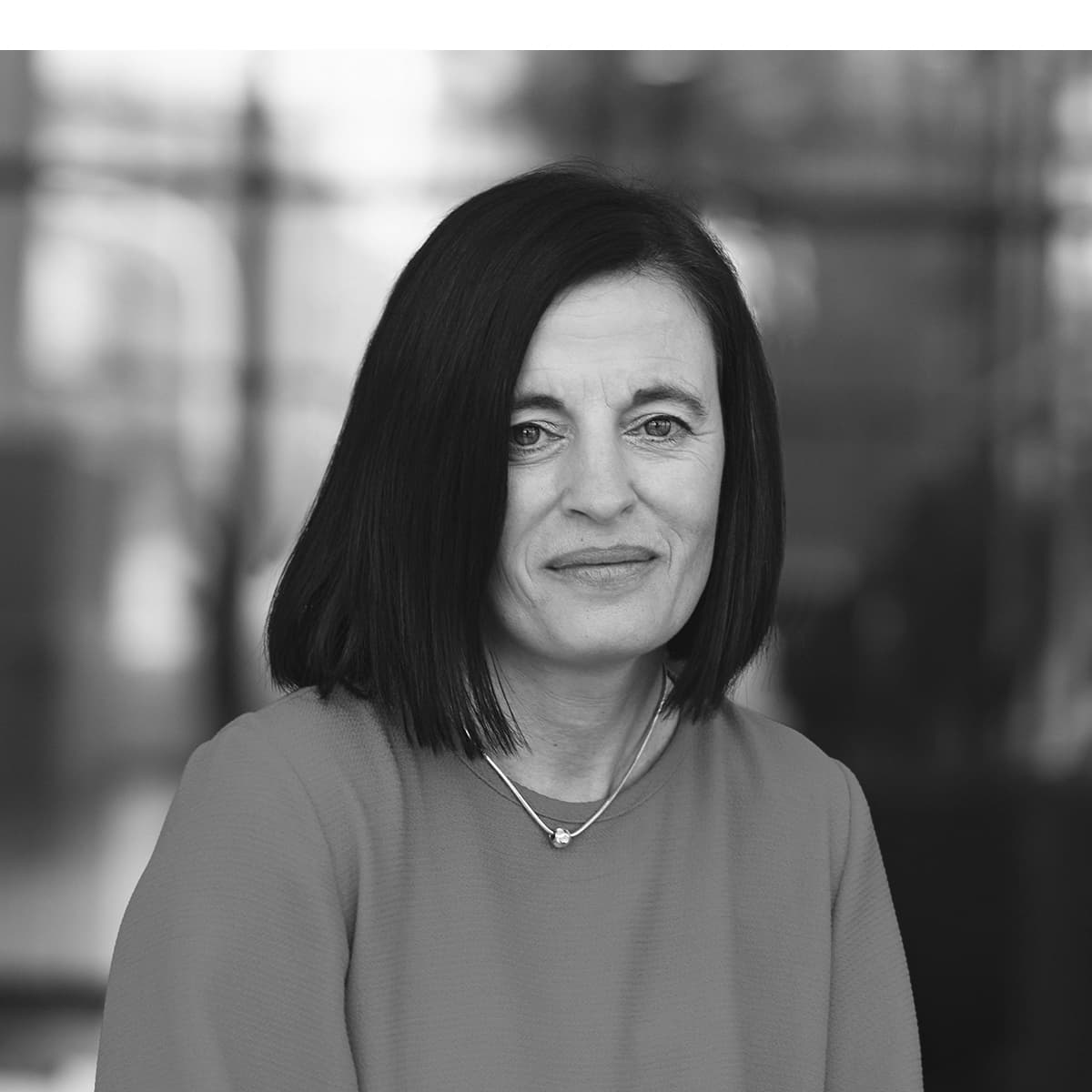
Katrien Marent
EVP & Chief Marketing and Communications Officer - imec
Katrien has an engineering degree in microelectronics. She joined imec in 1992 as analog design engineer and specialized in design of low-noise readout electronics for high-energy physics. In 1999, she became press responsible and scientific editor at imec's business development division and was responsible for authoring and editing the research organization's numerous company technical documents and publications.
In 2001, she was appointed corporate communications director at imec. Her responsibilities expanded in August 2007, when she got the position of external communications director including corporate, marketing and outreach communications. In October 2016, she became VP corporate, marketing and outreach communication. Since April 2020 she is Executive Vice President & Chief Marketing and Communications Officer and member of the executive board of imec.
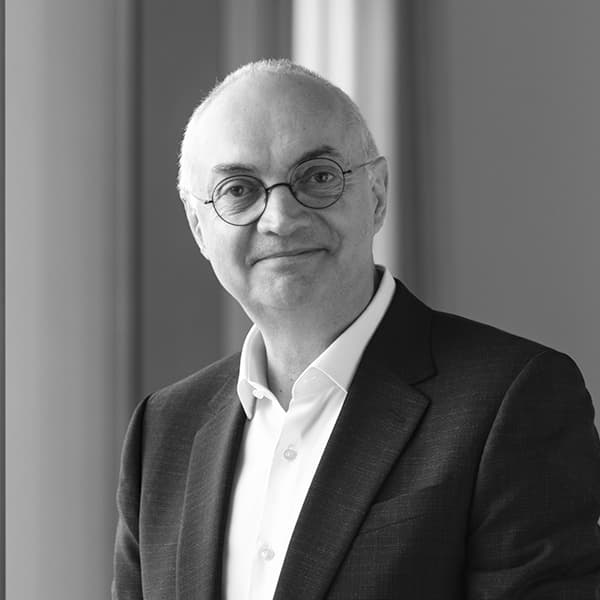
Luc Van den hove
President & CEO - imec
Luc Van den hove is President and CEO of imec since July 1, 2009. Before he was executive vice president and chief operating officer. He joined imec in 1984, starting his research career in the field of silicide and interconnect technologies.
In 1988, he became manager of imec’s micro-patterning group (lithography, dry etching); in 1996, department director of unit process step R&D; and in 1998, vice president of the silicon process and device technology division. In January 2007, he was appointed as imec's EVP & COO. Luc Van den hove received his PhD in electrical engineering from the KU Leuven, Belgium.
In 2023, he was honored with the Robert N. Noyce medal for his leadership in creating a worldwide research ecosystem in nanoelectronics technology with applications ranging from high-performance computing to health.
He has authored or co-authored more than 200 publications and conference contributions.

Christophe Fouquet
President & CEO - ASML
French national, member of the Board of Management since 2018 (term expires in 2026).
Christophe joined ASML in 2008 and has held several management positions in marketing and product management.
Christophe holds a masters’ degree in physics from the Institut Polytechnique de Grenoble. Before ASML, he worked at semiconductor equipment industry peers KLA Tencor and Applied Materials.
- Executive Vice President and Chief Business Officer at ASML (2022-2024)
- Executive Vice President EUV (2018-2022)
- Executive Vice President Applications at ASML (2013-2018)
- Management positions in marketing and product management at ASML (2008-2013)
- Director of Marketing at KLA Tencor (2003-2008)
- Global Product Manager at Applied Materials (1997-2001)

Régis Hamelin
CTO - BLUMORPHO & Coordinator aCCCess
Régis Hamelin earned an engineering degree in materials science and a PhD in Electronics from the University of Lille, where he researched semiconductor lasers with the IEMN optronics team in 1993. He spent seven years at CEA-LETI as a process engineer and program manager in optronics, developing expertise in compound semiconductor photonic components and packaging. In 2003, he co-founded Intexys Photonics, serving as CTO and board member in launching active optical cables for high-end supercomputers. In 2010, he joined the “COWIN” support action under FP7, leading to the foundation of BLUMORPHO, which he joined as CTO in January 2015. He is currently coordinator of the aCCCess CSA working closely with the network of Chips Competence Centers.
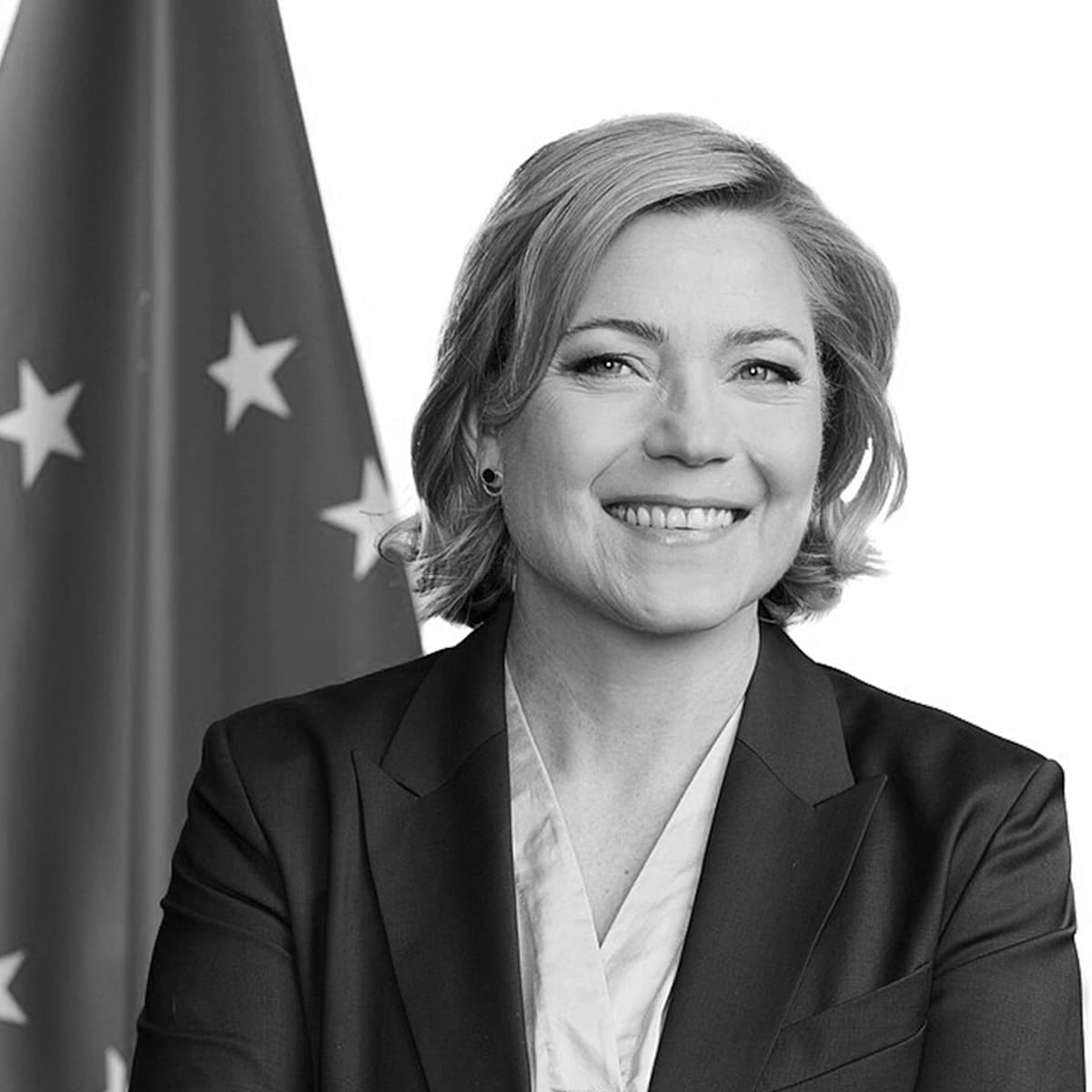
Henna Virkkunen
EVP - European Commission
As Executive Vice-President for Tech Sovereignty, Security and Democracy, Ms Henna Virkkunen is tasked with combatting the increasingly complex security threats facing the EU, whilst at the same time strengthening our external borders and our internal security. This goes hand in hand with her responsibility to ensure our freedoms, justice and democracy are strengthened too.
Furthermore, she is responsible for the Digital and Frontier Technologies portfolio. This entails leading Europe’s efforts in shaping a competitive, resilient and inclusive digital future and maintaining or attaining leadership in strategic digital technologies.
Prior to joining the European Commission Ms Virkkunen served as a Member of the European Parliament for over ten years. As a Member of the Committee on Industry, Research and Energy her work focused on digitalisation, research and frontier technologies.
Ms Virkkunen has held various ministerial positions in Finland, namely Minister of Transport and Local Government (2014), Minister of Public Administration and Local Government (2011-2014) as well as Minister of Education and Science (2008-2011).
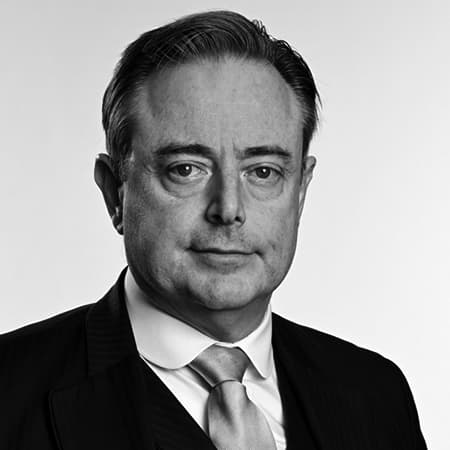
Bart De Wever
Prime Minister of Belgium
Bart De Wever (born 1970) has been serving as Prime Minister of Belgium since February 3, 2025, becoming the first Flemish nationalist to hold this position in the Belgian federal government. He previously served as Mayor of Antwerp from January 2013 until February 2025, and now still holds the title of titular mayor. Before his premiership, De Wever led the New Flemish Alliance (N-VA) political party, for over 20 years.
Bart studied history at the University of Antwerp and the KU Leuven. He started his career as a Teaching Assistant (TA) at KU Leuven. After the dissolution of the People’s Union (VU), he was one of the founders of the New Flemish Alliance (N-VA). He chose to put aside his academic career and devote himself fully to politics. From 2004 on, he has served various terms as a member of the Flemish Parliament, the Chamber of Representatives and the Senate.
Bart De Wever succeeded in making the N-VA the largest party of Flanders. Its ideology is based on modern conservative and free enterprise economical views. The N-VA stands for a fiscally responsible and realistic socio-economic policy that protects the interests of all those who work, create, innovate, invest and stimulate business.
De Wever wrote columns for various newspapers and has published several books, including the popular essays ‘On identity’ and ‘On woke’. He is fascinated by Ancient Rome. His historical knowledge and Latin quotes are legendary. Today, he lives in Deurne, together with his wife Veerle and their four children. He is a teetotaler, likes running and has completed several marathons, including the iconic Athens marathon.
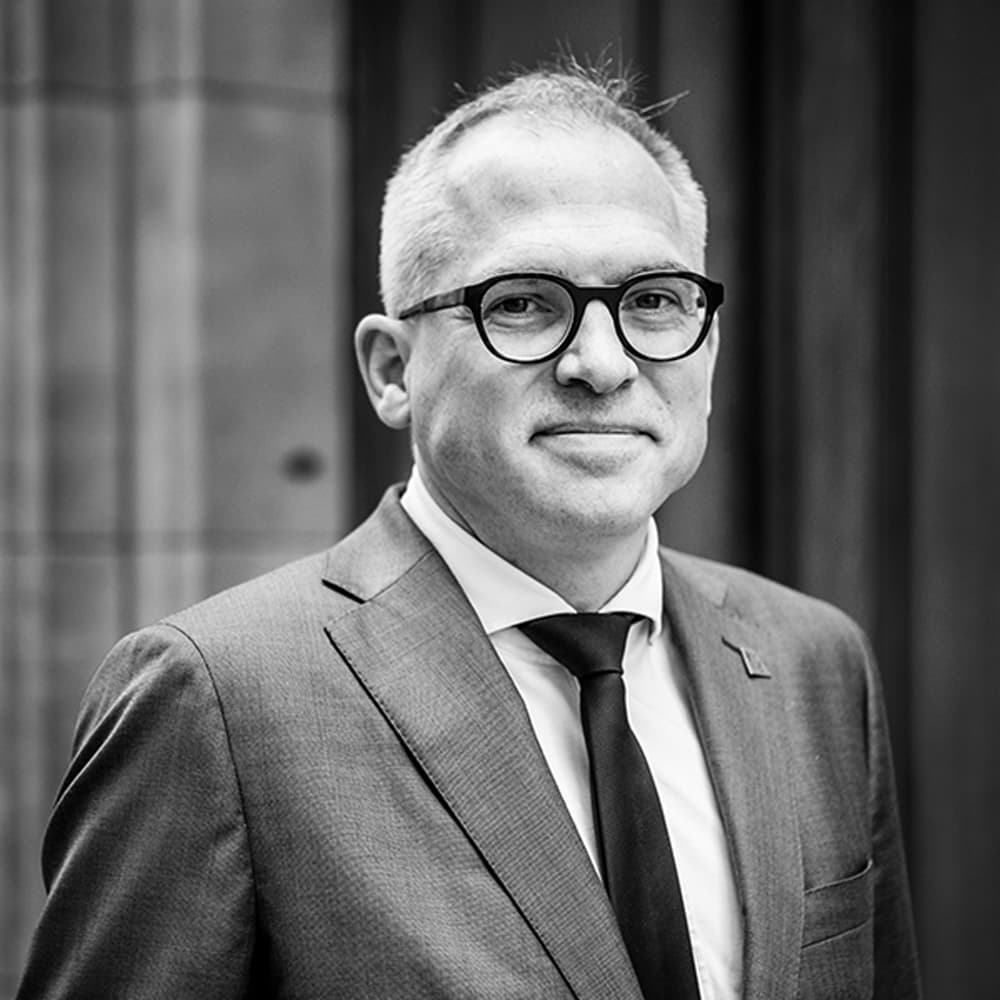
Matthias Diependaele
Flemish Minister-President, Flemish Government
Matthias Diependaele (born 1979) is the Flemish Minister-President and responsible for Economy, Industry and Innovation, Foreign Affairs, Digitalization, and Facilities Management. Since September 2024, he has led the Flemish Government Diependaele I, a coalition of N-VA, Vooruit, and CD&V.
He studied law at KU Leuven, specializing in international and European law. After gaining initial experience as a political staff member in the European Parliament, he was elected to the Flemish Parliament in 2009. At that time, he was the youngest member of parliament. He went on to become the N-VA’s parliamentary group leader.
In 2019, he became a Flemish minister for the first time, responsible for Finance and Budget, Housing, and Immovable Heritage.
Matthias Diependaele lives in Zottegem and is the father of four children. He also has two stepchildren with his partner Sarah.

Romano Hoofman
Strategic Development Director imec.IC-link - imec
Romano Hoofman is Strategic Development Director at imec.IC-link since 2016. He is currently responsible for the innovation programs of the unit and for the coordination of the EUROPRACTICE Service.
He started his career in industry, where he worked as a Principal Scientist at Philips Research and later on NXP Semiconductors. He covered many different R&D topics, ranging from CMOS integration, advanced packaging, thin film batteries, photovoltaics and (bio)sensors.
Romano received his PhD from the Technical University of Delft in 2000, where he investigated charge transport in semi-conducting polymers. He has authored more than 30 publications and holds more than 10 patents in various research areas.
Registration
This event is by invitation only. For questions, contact events@imec.be.
Location
Imec 1
Kapeldreeef 75, Leuven
The RRF projects granted to imec on the high-NA lab and the testing and experimentation facility for edge AI
Flemish Resilience Project VV021/10
“Miniaturization in Advanced Semiconductor Technologies: Establishment of a High Numerical Aperture (NA) Extreme Ultraviolet (EUV) Wavelength Lab”
Start Date: 09/01/2021
End Date: 02/28/2026
Digital and industrial leadership combined with ambitious climate goals are the key pillars to maintain Europe’s position as the leading industrial continent in the world. The objective of this project is to enable the relentless miniaturization in advanced semiconductor technologies through further research into new lithographic processes. Imec, together with ASML, is setting up a High NA EUV Lab with the goals of achieving a faster learning cycle for high NA EUV technology, reducing development costs, and accelerating the adoption of high NA in chip production. It will be the only location worldwide where this technology can and will be developed. This project provides funding for the purchase of research infrastructure to expand the Leuven part of the High NA EUV lab. This involves highly advanced, high-tech equipment focused on inspection, characterization, and modelling of extremely small patterns and defects.
The primary impact of this project is to strengthen the global leadership of the imec in process development and industrial introduction of advanced lithography technology. As a fundamental step in chip production (projecting the circuit pattern onto the wafer), control over this step is essential to continue the miniaturization cadence that underpins the entire semiconductor industry.
This project was made possible through the support of the Flemish government and the European Union (RRF).

Flemish Resilience Project VV023/11
“TEFHW4AI (Test and Experimentation Facility Hardware for Edge AI)”
Start Date: 10/01/2022
End Date: 02/28/2026
With regard to the current global acceleration in the “data economy,” it is important to guarantee the technological sovereignty of Flanders and Europe in the field of artificial intelligence (AI). Although many applications and services use cloud-based AI services, the rapidly evolving trend of embedding AI at the edge (edge AI) offers a competitive opportunity for European industry. The development of state-of-the-art edge-based AI systems requires the presence of a platform that will allow the European ecosystem to test edge AI components/solutions based on advanced low-power technologies. The high costs associated with purchasing the necessary semiconductor devices and the need for long-term investments have prompted Europe to set up a targeted initiative to offer such a platform to European companies. Imec, Fraunhofer, and CEA-LETI have decided to act as a core group to submit a proposal for the call under the Digital Europe Program for the establishment of a test and experimentation facility (TEF) in the domain of edge AI. This collaboration will give Flanders and Europe access to state-of-the-art advanced low-power technologies. Rapid insight into the performance of their Edge AI R&D prototypes will enable designers/companies of these systems to design an application that meets all specifications more quickly, allowing the final product to reach the market faster. By actively promoting access to the Edge AI TEF platform, imec will encourage the design community to grow. Imec will also continuously explore opportunities to establish and support new spin-offs in this research domain. Furthermore, this project will also allow imec to strengthen its position as a key European player.
This project was made possible through the support of the Flemish government and the European Union (both RRF and DEP grant number: 101083307).